
Tunisha Brown discusses the value black women bring to entrepreneurship, emphasizing the role of the home and community in shaping their abilities. She shares her business experience and highlights the importance of effective workload management. Tunisha expresses interest in artificial intelligence and growing her brand, IMPACT Magazine. Consistency and trust-building are credited with her success. She chose Utah as her location due to support from individuals and organizations. Tunisha is excited about her projects and the IMPACT she continues to make.
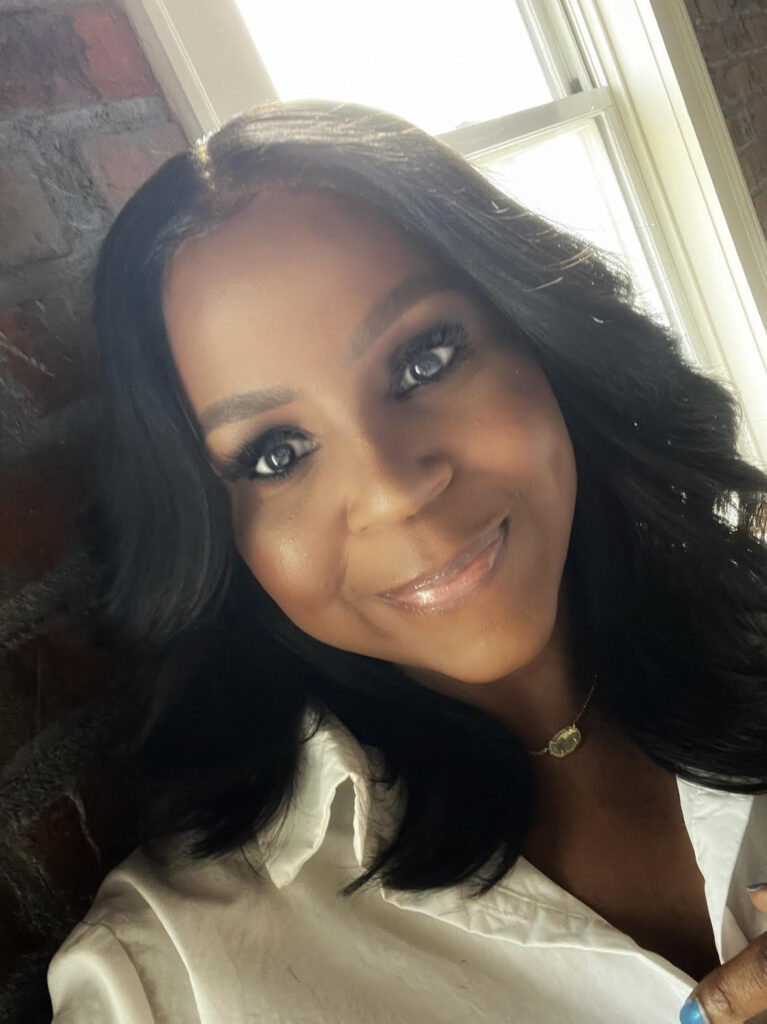
What value do you think black women bring to the table and how can we continue to lift their voices and showcase their talents?
Black women bring so much to the table because we are inundated with everything, number one, we're black women, so we have the opportunity of not only having a family at home where we take care of not just ourselves, but we take care of our siblings, our children, our aunts, and uncles. The home really shapes who we are to the outside world and that's how we're able to do what we do because at home, we are all of those things that encompass what a home should be. A lot of times, we are taught integrity, morals, and being loyal. When we do go out into the world and face so many things, black women exude those things. When we grow into things of entrepreneurship, we are really putting out what we have within, we're only doing what we know.
We know how to build community. We know how to be great people to each other. We know how to support one another. We understand our skill set and our people, so we have to be entrepreneurs. We have to go out and make that extra money or make more money in order to take care of our families.
How have you been able to utilize the skills that you have learned in your past roles in business administration to help you in your current roles?
For nine years, I worked at Merrill Lynch and when I was hired, I started as an HR advisor. I was later promoted to a recruiting coordinator. With the promotion came a great deal of responsibility in which Merrill Lynch hired 50,000 people a year. I was the coordinator for five recruiters and they were all top level executives. I was doing all of the background checks, all of the backend logistics to get people hired. One day I'm sitting at my desk and I just felt overwhelmed. I went to my supervisor and said, “I'm overwhelmed. I don't think I could do this, it’s too much for me.” Everything came at one time and she said, in which she proceeded to show me a journal. My supervisor said, “What you have to do is create a system that works for you.”
My supervisor said, “I put down everything that I need to do and I prioritize it. Then I get folders and I put everything in, a blueprint to prioritize my day and time management.” I still use that system to this day. People wonder, how am I able to do 50 million things all at one time? It is because of that system that I've been doing this for 16 years. The system is how I've been able to do so many things with myself and my team. When people come, they feel so great and they love what they get because it is efficient and everything starts on time. Ever since I started this system, one of my most important beliefs is to always start on time. There are just certain things where I have to bring about excellence and it's only through this system.
When you first came into the film & entertainment industry, what were some issues that you were facing and how did you combat those?
The biggest problem for me was working in survival mode. I wasn't working in a mode of thriving. What I mean by survivor mode, I was a single mom, I found the niche of something that worked within my magazine and also planning events. I said to myself I'm going to focus on the events and I'll let the magazine just be the magazine. What I know now is, and this is what I would tell everyone, you cannot do anything in survival mode. That is the biggest lesson for me because decisions are made in haste and you’re not looking out for what is the best outcome. I paid so much attention to the events because the events were making money, even though the magazine would have made way much more money had I put the same effort and energy into it. I didn't make great decisions because of that. I took my eye off of the magazine and focused on the events. The events grew and the magazine grew at a slow and steady pace. I like to tell people about entrepreneurship is to keep the main thing, the main thing and not to make decisions in survival mode.
What have been some of the biggest trends in business that you have seen that you've been kind of keeping your eye on trends?
A.I (Artificial Intelligence) is one of the things that I am focusing on with this new technology because it's so exciting and there are so many things that can be done through A.I. I can see so many facets of A.I, it could be from writing, all the way to art. I believe instead of many people being in fear of A.I, if they get to understand the functionality of it, they will get to understand that it can be good and it has some traits where everything could go wrong. If we hone it, if we learn from A.I and get to an understanding of it, it could be very beneficial in the long run.
As far as marketers, they can utilize it, not just for ideas but for thoughts. It can put together a strategy or can put together some wording in your voice. You don’t want A.I to take control of you, you want to take control of A.I. Use your own authentic voice and allow it to help you with whatever you need.
Where do you see your brand in the magazine going in terms of business opportunities and the IMPACT that you can make within the community?
What I know for sure is we're going to continue to move forward. We're gonna continue to put out content for TV, the first series is our podcast television show, “In The Moment With Tunisha.” We're just going to enhance what we are already doing and move forward. Two years ago, we weren't even thinking about A.I., but now we're here and everyone has to visit it and adjust to that. What I'm gonna do is enhance exactly what I'm doing. Take the events, take the TV show, and do greater things with the magazine and to start highlighting more things far as fashion and more in depth stories of people and beauty with everything these things encompass.
Which particular skills, whether they're soft skills or business related, have played a role in your selection as the recipient of women who empower Citibank's women to watch in 2021 in addition to other awards?
Consistency. I've been consistent for the past 16 years to black people's stories, to empower and encourage and educate. Consistency leads to greater things that build trust, people trust that this is who I am and this is what my magazine entails. That is the way that people have been able to pay attention to the brand, pay attention to me and also say you've been doing such a great job for these past 16 years. Here's the coveted African-American Chamber of Commerce Award, here is the Women Who Empower Award, in addition to CitiBank. It's consistent.
What is the most promising aspect of having a business in Utah?
I knew Utah would be good for my business when I spoke to William Marks of Facebook about a networking mixer regarding a partnership with Meta and they came on board. I knew that there would be a niche of people who would gravitate to what I'm doing. Partners such as Strong and Hanni, Buckner, and Meta. They have been consistent partners with me to put my message forward. When William Marks said let me support you, I knew Utah would be a good state for me to come and bring the magazine, along with showcasing the amazing people of Utah. All of the stories of the black women from Utah who are changing the game. We are telling their stories in depth and working together as one. I'm excited to showcase stories and continue to move that forward.
Our conversation discusses various industry trends, including increasing interest in sustainability and international business, the importance of education in keeping-up with trends and cultures, the differences in legal education and practice between the U.S. and Europe, and the need for flexibility when adjusting to foreign environments. We also touch on specific topics such as privacy regulations and the ethical considerations of artificial intelligence.

As you are involved in direct investing and licensing, which industry trends are you keeping an eye on at the moment?
Lately, I noticed there is much more interest in sustainability. The European Union is becoming increasingly stringent with ESG (Environmental Social Governance) requirements. In advising clients as lawyers, we need to be in tune with the new legal environment around those requirements. For example, the new European Union’s Corporate Sustainability Reporting Directive (CSRD) on ESG reporting will apply to U.S. businesses that have operations in the European Union or have subsidiaries within the European Union. In the past, the focus has been more on the environmental aspects of ESG; however, the COVID-19 crisis became a key moment in the discussion around the social aspect of ESG and it highlighted, for instance, our society’s financial disparities, a shortage of affordable housing, the importance of our connection to nature, the gender and diversity gap, and an increase in mental illness. As a result, organizations are trying to be more transparent and mindful in the treatment of their employees, in their relationships with their supply chains, and in their support of their respective communities.
Such a shift impacts the legal profession as well, particularly as the new generations of attorneys are very interested in social issues and sustainability, it's part of their belief system.
How do you think business can best handle international relations in addition to supply chain and privacy issues?
It's no longer an option for a business not to have international operations. We live in a global economy, customers are located anywhere in the world. For all of the businesses that we work with now, there's an international component, whether it's opening an office in a foreign country or entering into agreements with foreign distributors, the mindset of businesses is much more in tune with the global economy. I think COVID-19 taught all of us how important supply chain issues are. Another important component of international operations is the treatment of privacy. The European Union is leading in regards to privacy. There is a regulation that is called GDPR (General Data Protection Regulation) which regulates how businesses treat personal information of customers and vendors. In the U.S. we don't have a similar umbrella regulation but rather specific state and industry regulations., Utah, for instance, now has a privacy statute. Companies need to make sure they have a privacy policy and that they comply with such policy. Cyber security has also been incredibly important with companies having to try to avoid issues in that regard and trying to be ready to respond quickly to a cyber attack.
Another key factor in today’s economy (and therefore in today’s legal market) is artificial intelligence (AI), its implications and proposed regulations. ChatGPT 3.5 is being used not only by individuals but also by businesses and the 4.0 version now has more advanced and impactful features, but we cannot ignore that AI brings about ethical issues. At the end of March of this year, Italy temporarily banned ChatGPT after raising concerns about how ChatGPT processes and saves user data, and other European countries followed suit, until those privacy concerns were finally addressed. We are witnessing a delicate balance between technology progressing along with artificial intelligence and machine learning and the protection of privacy.
How do you see the relationship between education and sustainability evolving in the future, particularly in the context of international business?
Education is key. Education is extremely important in preparing the new generations for a very different business environment along with a very different economy which is really global in nature. Regardless of your field, you should keep an eye out for international trends, be prepared to understand the culture in other countries and how to interpret foreign news. I read the U.S. news of course, but I also read European news on a daily basis because it's important to understand what the trends are in other jurisdictions. For me, that is crucial in order to be able to better advise my clients.
As a general proposition, education needs to be open to new perspectives. Understanding the global market will also help with diversity issues in the workplace because if we are more understanding and more aware of other cultures as we get our education, we will be more open to work with individuals coming from different cultures. I think that new generations are much more open and flexible in that sense.
Education in the US is much different from other countries, Italy for instance. How is law different in Italy compared to the U.S? What was that process attending the College of Law at the University of Utah in order to obtain your U.S law license?
It was interesting. At first, I was frustrated that I had to go back to law school after having already completed my legal education in Italy. In the long term, it was a really good investment of resources and time because the United States from a legal perspective is a common law system, which is very different from Europe, which is generally a civil law system. In Europe, you have codes (for example the civil code, the criminal code, etc.), while in the United States, you have statutes, along with case law and judges who are bound by prior decisions. It's a much more practical approach compared to the Italian system.
The education in the law sector was also very different in Italy. In Italy, I studied the history of the law along with the philosophy of law, for instance. In the United States, there is a more practical approach to the law. Also, law schools in the U.S. tend to follow the Socratic method, where you are called in class and expected to speak out based on the materials that you have read in preparation for class; in Italy, on the other hand, classes consist in lectures given by law school professors, and exams tend to be oral exams, as opposed to written essays or multiple choice exams. In addition, in Italy law is an undergraduate program; you go to law school right after high school and once you graduate from law school, you have to do an internship for two years before you're allowed to take the bar exam. There is a three-day written examination along with an oral examination in front of a committee composed of judges, law professors, and attorneys in which they test you on many different subjects. It's very intense and very difficult. The passing rate in northern Italy where I took the bar exam was very low, around 30%.
. Another obstacle I overcame was dealing with the language barrier. I did not speak English when I first came to the United States and I had a few months to learn the language before I applied to law school. I took intensive English classes at the University of Utah and shortly after, I took the LSAT, followed by applying to law school. The advantage in living in a foreign country while you are learning a foreign language is that the learning process is much faster, although you have to be rather flexible.
How can businesses best ensure they are complying with international regulations and prompting sustainable practices across their operations?
It's a delicate balance–knowledge is power. Businesses have to learn about the new regulations and that's where attorneys can be very helpful in educating them, whether it's an in-house lawyer or whether it's outside counsel. In addition, entrepreneurs should plan on attending relevant international conferences and trade shows, which will also prove helpful in understanding how to best negotiate with their foreign counterparts.. For example, it's hard to do business in Southern Europe unless you establish a relationship with the other side first. This could take many dinners, time, and a lot of communication back and forth. Here in the U.S., business people tend to move faster and communicate a lot via e-mail and text messages. The personal touch that is so crucial in negotiations in certain foreign countries sometimes is missing here.
What role do you see the legal profession playing in promoting sustainable business practices?
Law for me has a very important role, which is to contribute to society's progress. A lot of times new trends emerge in the economy, in the social settings, in people's expectations and the law has the ability to codify those trends and needs and to find and provide solutions for those needs. Law goes hand in hand with progress and has a very important role to play in that regard.
Which particular skills - whether they are business-related or soft skills - played a role in your selection as a recipient of Utah’s 40 under 40 Award?
In terms of that recognition, I was really honored to receive the award. I would say my differentiator is my international background. Because of my education in two different continents and in two different legal systems, I have been able to have a broader approach to issues and able to find creative solutions to clients' problems. Being Italian definitely allowed me to focus on creating and maintaining relationships over time and to be open to work with a number of different people. I find that the human factor is the foundation of every business. Every company is really about its people and you see that in the private sector, in government, in education. My very strong recommendation to students is to genuinely cultivate relationships throughout your career because that's the key. I think that answers a basic human need, in that everyone wants to feel like they are part of a community; but it's also a good long-term business practice.
The World Trade Association successfully hosted Lesley Paterson, a multifaceted personality known for her courage and resilience, as the keynote speaker at its Women in International Business Conference on March 8th. Paterson's address, titled "Be Brave," encapsulated her remarkable journey from being a 5-time World Champion professional triathlete to a pioneering figure in the film industry.
Originally from Scotland, Paterson moved to California after semi-retiring from sports, diving headfirst into a new venture by acting, writing, and producing. Despite facing significant challenges in Hollywood, especially with her project to remake the 1930 silent movie "All Quiet on the Western Front," she never gave up. Hollywood's initial disinterest in a German language film about World War I did not deter her. Instead, she funded her dream by winning a triathlon with a broken shoulder, securing the $10,000 needed to maintain the film rights just as they were about to expire.
Her persistence paid off when Netflix funded the movie, leading to its colossal success, bagging 7 Baftas and 4 Oscars. Paterson's story is a powerful testament to bravery and resilience, serving as a beacon of inspiration for women in international business and beyond. Her successful transition from sports to the film industry, culminating in the cinematic achievement of "All Quiet on the Western Front," now available on Netflix, underscores the limitless potential of steadfast determination and the courage to be brave.


The WTA had the opportunity to interview Missy Larsen, VP of Philanthropy and Community Impact at doTERRA Healing Hands, about the organization’s efforts in Ukraine and the progress they have achieved.

How long have doTERRA’s efforts been present in Ukraine?
Because of the global impact of doTERRA’s Wellness Advocates and our essential oils sourcing footprint, we had our efforts present in and around Ukraine well before the current crisis. Some of our inspired Wellness Advocate Leaders who have residence and land in the Czech Republic had an inkling that their property and support would be needed. They began collecting emergency supplies including water, tents, and long-term food. To move forward with regional support at the time, they began an on-site leadership training program that served many Ukrainian citizens. Right when it started to look like there could be a crisis in the region, the Wellness Advocate Leaders teamed with doTERRA to support the people in and leaving Ukraine.
doTERRA Healing Hands has also been working over the past two years with leaders in Ukraine to fight human trafficking and victimization through our Hope Action Plan (doterrahealinghands/hope). Prior to the crisis, we were working with Ukraine Child Protection to enact policy changes to orphanage care. When children were immediately at risk due to the invasion, doTERRA Healing Hands worked with trusted contacts to move high-risk and disabled children out of the country and into safety.
What do doTERRA’s efforts look like in Ukraine and who are you working with?
Immediately, our people on the ground found a way to digitally transfer small amounts of cash to trusted individuals who were moving women and children out of Ukraine. doTERRA quickly launched a fundraising campaign where doTERRA founders matched up to $200,000 in donations to provide support for Ukrainian refugees. Within just over a week, the campaign raised hundreds of thousands of dollars, and to date, over $700,000 of support has gone into the region through the doTERRA Healing Hands Foundation in the US. Donations continue to be collected for this campaign at doterrahealinghands.org, where every penny of every donation goes directly back to support Ukraine. This is made possible because doTERRA covers all administrative and operational expenses.
In addition, doTERRA’s European team went into immediate action and started a product campaign where they matched any physical donations and resources that came in. An additional $125,000 has gone into support projects supporting refugees and those who have chosen to stay in Ukraine. We have also worked closely with doTERRA sourcing teams in Moldova, Bulgaria, and Poland where we have sent Emergency 72-hour kits and additional supplies to help refugees in those regions.
Just recently, doTERRA founders granted permission to one of our military-trained sourcing employees to take corporate leave to use his expertise with the Committee for Open Democracy Ukraine. He is helping to evacuate people and is going into war zones with supplies for those who are staying in those regions. The organization has evacuated 42,000 people and helped 166,000. This particular employee came to the founders after knowing that his unique skill set was needed to save lives. I am always so impressed by doTERRA founders and their ability to see what really matters. He is on a temporary paid leave of absence from the company as he pursues his mission in Ukraine.
doTERRA Healing Hands supports many different organizations including border relief, emergency relief, support for goods and food, and those helping to provide 72-hour emergency kits. We work diligently to ensure that all of our support goes to reputable organizations, but we also realize that the scope of needs in that area is too broad for us to focus on one area of support.
As of May 16th, 2022, there are twenty-five organizations that we support. We are able to use doTERRA’s global network to really connect with our trusted partners and provide so many people to do work on the ground.
What barriers do the people working on the ground face?
One of the saddest stories I heard recently was a request for helmets and protective wear by citizens who chose to stay in Ukraine. The Ukrainian citizen spoke to a friend in the US and asked for three helmets to protect her loved ones on the street. The next day she called back to let the friend know that they would now only need two, as one of the boys that previously needed protection, was killed near their home. It is so important for us to remember the innocent lives that are constantly in danger and critical need.
What do doTERRA’s post-war efforts look like in Ukraine?
Because doTERRA is throughout the region, we are in a unique position to continue to support needs up close and well into the future. Our Wellness Advocates are naturally structured into supportive teams, which makes peer-to-peer support possible and a reality. We are so grateful for the thousands of Wellness Advocates in Europe who are really stepping up to support their business teams, friends, and loved ones. Our European sourcing partners and internal doTERRA Corporate employees are also stepping up to support those in need.
In addition, doTERRA Healing Hands will continue to push forward our Hope Action Plan to fight human trafficking and victimization. Stories we hear from the border are horrific, as women and children are terribly vulnerable to predators. nue supporting those in harm's way, whether they’re in-country or have settled in surrounding countries. This crisis is not something we will deal with and be done. We see ourselves as a long-term solution that will provide support in numerous ways. We aren’t going anywhere!
When the crisis first broke out, we saw it all over the news and it was a topic of discussion. Lately, it does not seem to be as prevalent. Do you think it is important that we continue to talk about this crisis and others?
I come from the world of PR. I ran PR for the Elizabeth Smart case back in 2002. When Elizabeth was first kidnapped from her home in Salt Lake thousands of people showed up to search. Over time, it is natural for human interest to get distracted to the next dilemma, but we knew that Elizabeth could not be found without constant reminders of her absence. Miraculously, and thanks to people keeping her story alive, she was found nine months after her kidnapping and embodies the meaning of the word hope!
We are exposed to so many problems in our world, that it is very important to keep talking about the ones where support is needed. It is everyone’s job to keep the story alive and to keep talking about it. What you’re doing is angelic work, bringing awareness to the crisis in Ukraine.
doTERRA Healing Hands welcomes and needs community support. Check out their Hope Action Plan at https://doterrahealinghands.org/hope and their main page to find out ways to get involved in Ukraine and other global issues https://doterrahealinghands.org/.
The WTA interviews Nicole Stirling, Vice President and Chief Relations Officer of The Stirling Foundation, on her organization’s efforts with the current crisis in Ukraine and her lifelong passion for helping others.

What inspired you to have such a strong concern for helping people in need?
Like most of us, my family experiences have been the most formative of my own attitudes and actions. My mother and grandmother instilled my passion for helping others by showing me a beautiful example of what it looks like to help people in need. My 80-year-old grandma would make lunch and instantly want to run it up to the “elderly” woman a few blocks away. When the power would go out in her neighborhood, she would race out the door with an armload of candles to make sure all of her neighbors were taken care of. She was a powerful role model in that her first thought was to help others.
Later, when my daughter was struggling with mental health and I was just starting the Stirling Foundation, I noticed that when she was engaged in helping others, she felt better. Focusing outward, on helping other people, rather than focusing inward, typically brings perspective and benefits everyone involved.
What is your role in the Stirling Foundation? How did you start to become involved?
Four years ago, my husband’s brother, David Stirling, founder of dōTERRA, asked me to start a family foundation to expand our philanthropic efforts. This was the conception of the Stirling Foundation.
As the foundation has grown, we have been led to many project partners, individuals, and organizations (many grassroots) who have the vision, integrity, sustainable plans, and proven results. Together we have been able to make a much larger impact than we ever could alone. Currently, we are in 29 different countries and with over 200 projects somewhere in our project pipeline.
What do your efforts look like in Ukraine? How have you been helping the crisis in Ukraine? What are your main goals with these efforts?
We had projects in Ukraine prior to the current war breaking out. We first began our efforts to help the children of Ukraine after my husband’s stepsister traveled there to adopt. She became aware of unthinkable conditions and situations that the children living in orphanages are subjected to.
Since then, we have been working with Nicolai Kuleba, former Ombudsman to the President of Ukraine for Children’s Issues. We have been supporting his efforts to deinstitutionalize the orphan care system, taking kids from orphanages to foster families. His goal is to curb abusessuch as trafficking, which is alarmingly rampant in Ukraine. When the war broke out, we utilized our partners in Ukraine to bring immediate relief. To give a few examples, we have been feeding displaced people, buying ambulances, and providing medical supplies and battlefield protection equipment for doctors. We have also been providing filtration systems for clean water.
How can the community help if they want to get involved?
Since The Stirling Foundation is privately funded and doesn’t accept public donations, we recommend the community help via dōTERRA Healing Hands. Sharing the same founder, the Stirling Foundation and dōTERRA Healing Hands are like sister foundations; we support each other.
From the very beginning, dōTERRA Healing Hands has always been open and welcoming to community support. Since the start of the Ukraine crisis, they have connected with the right people throughout their extensive networks and have made a huge impact. Check out https://doTERRAhealinghands.org/ to learn more and become involved.
Have you had community support in your efforts thus far?
Yes, dōTERRA Healing Hands received an outpouring of support from the community once the call for help went out. They have used community support and aid to provide emergency kits, toiletry bags, and sanitation kits and have funded a great number of other initiatives with trusted partners in Ukraine.
Have you been able to see the good that your efforts have affected Ukraine?
It has been clear how profound our emergency response efforts have been. We have been able to get people to safety and provide for the basic needs of life. Together with dōTERRA Healing Hands, we have provided relief aid to over 25 different organizations on the ground in Ukraine. As a result of our combined efforts, more than 11,000 people have been moved to safety. A family farm and bakery we work with supplies 400 loaves of bread and milk to the local community each day. Our support was instrumental in the creation of seven refugee shelters/border transport stations, and we have stocked dozens of shelters in Moldova with food and other essentials. We provided warm clothing for nearly 40 people who were sheltering in a subway station and directly helped over 120 families. The needs of Ukrainians right now are real and immediate, and gratefully, our generous local partners and our brave boots on the ground have helped our response match some of the needs.
We have seen that the crisis in Ukraine was all over the news when the war first broke out. Now it seems to have fallen off people’s radar. Do you think it’s crucial that people keep talking about it to urge our lawmakers to make policies to help?
Although the coverage has waned some, people are still talking about it and wanting to make a difference. When I travel to different parts of the world, for example Africa, I am impressed by how often the war in Ukraine is mentioned. As global citizens, we need to keep them in our hearts and in our minds. We need to pray for them, and then we need to get to work and do what we can to help.
The World Trade Association of Utah thanks Nicole for her time, insights, and passion for helping people in need. For more articles from the WTA, visit: https://wtaofutah.com/wta-blog/

by Ellen Jayne
The World Trade Association interviewed Socrates Sourvinos, the Consul General of Greece based in San Francisco.
Current State of Affairs in Greece
During the period of the financial crisis, Greece's GDP was slashed by approximately 25%. Still, after an enormous effort and the implementation of many economic and public reforms, the situation improved remarkably. As a result, according to the Organization for Economic Cooperation and Development (OECD), Greece's projected growth rate for this year might approach 6.0%. Despite the high level of volatility in the global markets, the general outlook for the country's finances remains highly positive.
Interview with Socrates Sourvinos

What are your main functions as the Consul General of Greece?
Consulates are primarily in charge of matters related to citizens. In most cases, a Consular officer assists people in addressing private matters. Furthermore, a Consulate handles economic, educational, cultural, and scientific diplomacy issues. Face-to-face meetings and personal contact with people are fundamental parts of the job. Independently of the country in which a Consulate is located, human contact and the capacity to understand the needs of one's interlocutors are prerequisites for success.
As a Consul General, my days start at the office by checking my correspondence and prioritizing the day's tasks. During the rest of the day, I usually participate in virtual or real-life meetings focusing on an array of matters.
What can we learn from the pandemic moving forward?
The pandemic wasn't a disruptor; it was an accelerator. Things expected to happen in 20 years occurred in 20 months. These days, the level of globalization is growing at a swift pace, and the world feels so much smaller than a few years ago. The internet and digital technologies have brought the world's citizens closer than ever before, and it is rather evident that global problems, such as Covid-19, need global solutions. That said, the pandemic, perceived as a common enemy, provided the opportunity for humanity to create a unified front. It seems that, at least in the sphere of science, impressive results were produced in the form of vaccines and other types of remedies.
Which changes have you seen in Greece due to the pandemic?
The pandemic is an event that future historians will rather remember for the indirect repercussions it brought to our societies. For example, remote labor and the digital nomads' trend tend to become widely accepted due to the pandemic. Regarding digital nomads, they are a category of professionals who work remotely from many different locations. Digital nomads have very particular needs, and given that they might be the first generation of truly "universal citizens," they are enforcers of change. This element means that this category of people will request unique services and arrangements (visas, schools, insurance coverage, taxation policies), therefore providing incentives to the public and private sectors to develop new services and products.
Could you explain more of the benefits digital nomads have in Greece?
Digital nomads are a special group of visitors whose stay in Greece is not limited to a specific season. They are long-term visitors whose contribution will directly benefit the country's economy. However, the indirect profits of their presence can be even more significant. The digital nomads are highly-skilled, international professionals whose extensive know-how and innovative spirit will enrich Greece's entrepreneurial ecosystem and stimulate highly creative synergies. Greece is a country well known for its natural beauty and mild weather, and I'm confident that there are many professionals, for instance, from tech companies in Silicon Valley, who will be enticed by the idea of remotely working from Athens, Santorini, or Mykonos. This perspective can be even more attractive, given that the country's human capital is highly qualified in many different fields and may use English as a working language.
As of 2022, there are 15.5 million digital nomads worldwide, moving on an average of every 6 months (Tagliaferri). According to a statistic from The 2022 State of Digital Nomads, Greece is the 22nd most visited country by digital nomads and the 5th most visited by female digital nomads ("2022 State of Digital Nomads").
References:
"2022 State of Digital Nomads." Nomad List, nomadlist.com/digital-nomad-statistics.
"Greece - Market Overview." International Trade Administration | Trade.gov, The International
Trade Administration, U.S. Department of Commerce, 11 Nov. 2021,
https://www.trade.gov/country-commercial-guides/greece-market-overview.
Tagliaferri, Costanza. "7 Exciting Statistics about Digital Nomads in 2022." ThinkRemote, ThinkRemote, 14 Mar. 2022, thinkremote.com/digital-nomad-statistics

The World Trade Association of Utah interviewed BYU Professor of Global Supply Chain, Scott Webb, about the BYU student trip to Greece where students learned about international and Greek business and were immersed in Greek culture.
What is the purpose of the student trip to Greece?

In 2016, Savage Services endowed the BYU Global Supply Chain program with $3.1M to provide BYU MBA students with a world-class learning experience. We prioritized this money to give BYU MBA students a Global Business consulting experience, specifically in the supply chain. BYU MBA takes a portion of the interest earned on that endowment each year to fund student travel to consulting projects around the Globe. The endowment specifically funds student travel for 20 students to travel and engage in global consulting studies. Students in the past have traveled to England, France, Italy, Greece, South Africa, Panama, Nicaragua, Costa Rica, China, and Russia. They have completed consulting studies that have saved businesses well over $30M in the past 6 years. We provide all services free of charge to companies (unless they require extra travel, and then we ask them to pay for the travel) as we prioritize this as a learning experience for our students and not as a money-making endeavor.
We selected Greece for our companies to consult with this year for 3 major reasons:
What are you hoping the students take away from their trip?
I hope my students consider themselves Global citizens. There seems to be so much nationalism in the world right now and I want my students to understand that business does not have boundaries and acts as a way to help people everywhere in the world.

My biggest hope is that the MBA students will recognize that the USA way of doing business is not always the best way of doing business. In the USA, we tend to be transactional in our business approach, while many other countries, including Greece, are more focused on relationships in business. I try to make sure that all my students get the opportunity to eat a good meal with our company hosts. Spending a long dinner with our Greek clients ended up being important to help the students recognize the importance of building relationships in business. We had a wonderful dinner with gracious hosts.
The students do not really get graded on their consulting studies; therefore, the motivation for them to do a good job is based purely on the reputation of our consulting agency. I like that they need to work through communication barriers, time barriers, cultural barriers, etc., to accomplish their studies. One of the problems with traditional education is that it is too theoretical and too precise. The real world is messy and focuses more on getting the job done than on theory. The consulting studies with Greek companies are a nice bridge between academia and the real world. I hope that our students leave this experience with a stronger recognition of what it takes to succeed in global business.
It is also important to me that businesses around the world recognize the extraordinary educational opportunities that the BYU MBA has to offer. We have extraordinary students, and our program provides exposure along with a strong academic preparation, giving them an excellent education.
I also hope that my students love Greece as much as I do. I think part of the program that is truly special is that we got to dig into company problems and meet local business and technical people. This allowed us to see Greece in a much better way than most tourists who only see cultural sights and eat great food; We got to know the great people of Greece and got to see how they have established companies and policies. It was an insightful experience for the students.
How long was the trip?
The total trip was 11 days in Greece, with 2 travel days.
We spent 4 days doing consulting studies and 4 days visiting Delphi, Olympia, the Parthenon, Ancient Mycenae, and Corinth. The students also had three free days to explore.
Is this a trip for only business students (for example) or open to anyone interested?
It is for 20 BYU MBA students and is fully funded through scholarships from the Savage Service endowment. Students are called “Savage Scholars” and the consulting agency they run is called BYU-MBA Savage Global Consulting. Students go through a rigorous selection process to be accepted as a Savage Scholar. We are always looking for international consulting projects, even ones that we do remotely. About 70% of our students speak a second language and have lived in a foreign country.
Can you share a quote from any of the students from the trip on the most valuable thing they learned?
Student, Ling Scalese says:
“The best thing that I learned in Greece is the culture. In Greece, interpersonal relationships within families are a lot closer than in the US. Children, in general, carry responsibilities inherited from parents, so family business is common. I love how tight the relationships are as families with frequent weekly reunions. People in Greece value meal time to spend with families to bond and build their relationships. With that being said, if we are doing business with people in Greece, trust-building without only talking business is very important.”
*As a proud member of the World Trade Association of Utah, Vasilios Karpos CEO of Statues.com coordinated the visit arrangements in collaboration with BYU.
In honor of Women’s History Month, the WTA of Utah interviewed Evangelia Mimikou. Evangelia is the liaison between the World Trade Association of Utah and groups, organizations, and entrepreneurs in Greece. She is also a practicing Supreme Court lawyer near Athens.
Currently, in Greece, more than 50% of those earning university degrees are female. In January 2020, Greece elected its first female president, Katerina Sakellaropoulou. Many organizations are actively advocating for women’s rights and gender equality throughout Greece. (Thelwell, 2020)
Despite these recent strides forward, there are still challenges to overcome. Men make up about 70% of the workforce in Greece and about 80% of the Parliament. Greece is the lowest ranking country in the E.U. on the Gender Equality Index, which measures factors like labor force participation rate, secondary education rate, and share of seats in Parliament. (Thelwell, 2020)
Furthermore, the impacts of the pandemic left many women without jobs. The time is now to empower women and advocate for gender equality.
Evagelia portrays her perspective on women in business in Greece:
Which challenges do women in international business face in Greece?
The three main challenges women face are funding, networking, and career advancement. Women entrepreneurs are difficult to find. This is because they lack access to financial tools and expertise.
Progression has been made in recent decades. Unfortunately, the pandemic changed everything. Many working women went back to the house, and many young women are scared they won’t find a job.
Which opportunities do women have in international business in Greece?
First, it takes awareness. Then, effort. Research from Harvard says that women score higher than men in problem-solving, communication, and teamwork. We have the skills but we must believe in ourselves and take the necessary steps.
Younger generations have been taking steps in the right direction. I am seeing now that younger couples share the family responsibilities and that gives me hope.
How can we set the next generation up for success?
In Greece, family is the most important thing in our lives. Parents have the opportunity to set examples for their children.
For example, my mother earned her degree at the age of 55 at one of the finest art universities in Athens. She became a painter and sculptor and many of her works are still on exhibit today. She accomplished so many things after she raised 4 children on her own.
Which decisions have you made that have enabled you to get to where you are today?
When I was 15, I was already working and planning on how I could gain financial independence. Since I was a high-performing student, I planned to study law. While I was in university, I was studying and working at the same time. I had an income and was able to provide for myself. It’s very important to be independent.
What advice would you give to your 15-year-old self?
Women can and need to stand on their own feet. You must be strong and independent, especially financially independent.
Which factors impact the lack of Greek women in the foreign market?
Greek women are some of the most educated worldwide; however, after university is the problem, they get a job but then family life takes over. Typically, women stop working after they have children, or they stop developing their networks and chasing their careers.
Cultural stereotypes still play a part. People prefer to go to male lawyers rather than female lawyers. People think men shouldn't have female bosses. These ideas prohibit our progression.
What other organizations or conferences can women in Greece join to get involved in international business?
A non-profit organization, WEgate, advocates for the professional empowerment of women and for equality in the workplace. WEgate helps women establish their own businesses, find a job, and network with professionals.
Further, WEgate provides training, consulting, and project management services to businesses looking to prioritize the equal representation of women at work. WEgate is funded by the European Union. You can find more details at wegate.eu.
Do you have any final advice for women reading this article?
I advise young women to be financially independent. Believe in yourself, your abilities, and your talents. Never let other people make you feel less than. The future is in front of us and we can make big steps to equalize women in business.
I believe that we [women] can make a difference in work. We must never give up no matter what happens in our life. We have the strength within us, it just takes perseverance and self-confidence.
__________
It was an honor and a privilege to interview Evagelia Memekou. Although we shared the same grievances for women in business, we also have both seen inspirational advancement in our respective countries. We believe in the future for women. Cross-generational and cross-cultural conversations like this pave the path towards progress, and I was honored to take part in one.
My intentions for this interview are to inspire you to take the next steps. As if we are in a relay, I am passing the baton to you to continue paving the path forward. I encourage you to invite a colleague, mentor, etc. to lunch or for a Zoom networking conversation. Share this on your LinkedIn and tag someone you’d like to get to know.
It’s not only women I call upon to make the difference. Everyone has the opportunity to shape the future of women in business, whether you identify as a he, she, or they. It’s in these personal connections that we can spark a movement on the front of women in business.
References:
Thelwell, K. (2020, November 1). Women's rights in Greece - the borgen project - global poverty. The Borgen Project. Retrieved January 30, 2022, from https://borgenproject.org/womens-rights-in-greece/
Silvia Cristina Fernandes Cintra do Amaral is the President of the World Trade Association of Brazil and illustrates her perspective on women in business. Silvia is also a practicing lawyer in Sao Paulo.
To commemorate Women’s History Month, The WTA of Utah interviewed Silvia to gain first-hand insights into the challenges and opportunities women face in Brazil.
With the first female president of Brazil serving from 2011 to 2016, Brazil has taken significant steps towards equality in recent years. However, women are still underrepresented in Congress (occupying 56 out of 594 seats), earn 30% less than men for the same tasks, and are more likely to drop out of school to support their families or due to an abusive situation. (Thelwell, 2020)
There is still work to be done.
With these issues at play, it’s more important now than ever to advocate for women’s rights.
Silvia shares her perspective on women in business in Brazil:
Which challenges do women in the international business face in Brazil?
The main challenge women face is a lack of access to information. With a lack of access to information and education, women cannot create their own opportunities for a better life.
Which opportunities do women have in international business in Brazil?
In Brazil everything is possible. Brazil is the face of transformation. Women can take the initiative to earn an education and find a fulfilling career.
What would your 15-year-old self say to the woman you are today?
You always go above and beyond for your work.
Which factors impact the lack of Brazilian women in the foreign market?
Familial stereotypes still play a role. Women are expected to take care of the household, husband, and children. When competing priorities clash, women revert to taking care of the household rather than pursuing their careers.
Do you have any final advice for women reading this interview?
Every action is an investment. You have all the essentials to go beyond. Chase your dreams because you can accomplish anything you set your mind to.
__________
It was a privilege and an honor to interview Silvia. It was empowering to discuss women’s rights with another female from a different country and generation and see how our values and experiences aligned. We share the same hopes for the future of women in business. I firmly believe personal connections and conversations like these pave the path towards progress.
If you were also inspired by the topics of this interview, I invite you to have lunch or schedule a networking conversation with someone in your field. Whether it’s someone in your office, on LinkedIn, or in your local city, I encourage you to take the time to discuss these important issues. Conversations like this spark the very essence of our future.
It’s not only women I seek to empower to make a difference. Whether you identify as he, she, or they, everyone has the opportunity to shape the future of women in business.
References:
Thelwell, K. (2020, January 27). 10 facts about girls' education in Brazil. The Borgen Project. Retrieved January 30, 2022, from https://borgenproject.org/10-facts-about-girls-education-in-brazil/
From a small mining town in Peru to leader of a highly respected multi-national company based here in Utah, Ed Macha knows how to make a dream become reality. Working for a Murray-based engineering company at the age of 28 he started Reliable Controls with a focus primarily on the mining industry. “I didn’t see a career path with the company I was with, so I left to develop my own dream of an all-inclusive company focused on technology and youth.” Reliable Controls has since expanded into other energy sources such as natural gas and established deep roots throughout the world, especially within the Americas.
Reliable Controls brings 20 plus years of expertise to the automation, commissioning, and optimization industry. With over 500 completed projects in 16 different countries, they are a proven partner for any company looking to modernize, improve and super-charge their industrial capabilities. Macha likens the work they do to a military operation, “We help you create a plan and execute it to the highest standard. Our footprint spans from Alaska to Patagonia, and we can be on the ground, ready with our tools, equipment and expertise anywhere in the Americas within a week.”
One of the pillars of the success Reliable Controls has enjoyed is a focus on education. “I believe very strongly that youth are our future, and that sustainable energy is the future of mankind.” Macha carries on the family legacy in Education. His grandfather was a director of Education in Peru and his mother also comes from education. “Our people are the key. Intellectual capital is what gives Reliable Controls an edge over the competition. Therefore, we recruit, develop, mentor, and train the best professionals from every corner of the world. By providing the best talent, processes, and methods available anywhere, we will help you meet your project's goals.” In 2007 Macha noticed a need for electrical engineers so Reliable Controls partnered with Dr. Marc Bodson and the University of Utah to develop a power distribution program. They have since helped hundreds of students by sponsoring internships and assisting with senior projects.
Talent is one of Reliable Controls biggest assets and one of its biggest challenges. “Finding talent that is interested in our industry is one of the biggest challenges we face in the future. Everyone wants to program and work for Google, but we have exciting, critical work to offer in our industry as well.” Utah has been a great source of this talent so far, both from the education ranks and from the professional ranks. Macha attributes his partnership and involvement with the WTA as “key in getting knowledge and support…If I have a question, I can find somebody that has an answer.” The WTA has also offered an excellent opportunity to listen to and learn from dignitaries from various countries. “It has been essential in understanding their needs and understanding how trade is essential and how it can be improved upon.”
With a focus on sustainable development from teams of trustworthy partners, the future of Reliable Controls and the renewable energy industry are bright. To read about and meet more inspiring business leaders, please visit our blog and become a member. Event updates are posted on our LinkedIn and Twitter.