
The World Trade Association of Utah recently met with Jay Davis, founder and CEO of Creatably & PillowCube for a virtual company visit. Davis is responsible for the PillowCube product development, marketing, and vision of the company, as well as creating experiential campaigns to increase brand awareness and sales with Creatably.
As a company, Creatably has created tens of millions of dollars in conversion revenue. “The whole goal of Creatably is to give clients a different experience for working with an agency.” said Davis. “Rather than focusing on brand impressions we tend to focus on revenue growth and profitably. We regularly take new clients from a revenue of two, five, or 10 million to 25, 50, 100 million plus. We do that over a course of years rather than a course of a decade.”
Davis has worked with brands such as The Color Run, which grew to $45 million revenue with the help of viral marketing techniques in the first 23 months. Another company, Manly Bands, went from earning around $12 million a year to $50 million a year with the help of Creatably techniques in approximately 15 months.
One of Creatably’s greatest success stories, PillowCube, was a product idea that started when Davis was just 10 years old. “I was at a sleepover at a friend’s house, and I asked my friends mom for a couple extra pillows. I’m a side sleeper, so it drove me crazy that I never seemed to have enough pillows. My best friends’ mom, who is Japanese, told me about how her family in Japan would make her a box of wood and wrap it in a towel and that’s what she slept with. As I got older, I kept thinking about this idea.”
Davis used this idea to create a pillow using foam samples from another client to create the pillow he had always dreamed of.
“As we dove into it, we realized there’s a huge side sleeping problem. Anywhere between 60%-70% of people identify as side sleepers in America. We found studies for how beneficial side sleeping is for people. It’s better for digestion, it’s better for your heart, but you have to have it in proper alignment. We realized a pillow that works for everyone isn’t great for anyone.”
After adding PillowCube to Kickstarter, it went on to raise $130,000 to start building the product. Today, the PillowCube website receives roughly 65,000 new website visitors each day.
According to Davis, there are 5 factors of a product that can help set up a company to experience rapid growth. These are what he calls, “the five D’s”. The product should be:
The success of these methods created by Davis speaks volumes. Creatably itself began as an idea and in just 18 months it began generating revenue of about $75 million a year.
“One of the things we talk a lot about at Creatably is ‘go fast, grow fast’.” said Davis. “This is our mantra that we work with. Clients in most places are limited by their own barriers that they themselves put in their way. We help them push through them quickly.”
With this model, Davis is redefining effective ways to do viral online advertising. “There’s a key difference in social media.” said Davis. “The cost that you pay to show someone your commercial is different depending on how good that commercial is, how much they enjoy watching it, and how much of the commercial they watch. It’s a key difference between TV and social media. When you have content on social media that people like watching, social media platforms charge less because it’s less disruptive to their true customers, which is the user.”
The key is to create a likable ad that the user feels compelled to interact with, whether it is through sharing the ad or tagging other users to view it with them. An important factor when analyzing ads is to find where users are “dropping off” and leaving the content. This can be used to find ways to create an ad that is fully immersive from start to finish.
In the early days of online advertising, it was easier to create a successful business just by posting a product and having it shared by other users with large followings. “The days where you can just have an Instagram following and have some influencers post your product, are just over.” said Davis. “You have to spend money; you have to do paid media to really get your product in front of people and acquire customers.”
In today’s digital world, explosive company growth is more attainable than ever. By using viral online marketing techniques, Davis is helping companies achieve dramatic results in very short time frames. To view more success stories and how Creatably is revolutionizing the world of online advertising, visit www.creatably.com.
On April 5th, 2021, the Kainach International Forum discussed the topic “Critical Success Factors of International Joint Ventures and Strategic Alliances.” Franz Kolb facilitated the discussion between four panelists talking about how joint ventures can positively impact businesses and especially how small businesses should approach this tricky and often confusing business decision. This month’s four panelists included:
 .
. 


What is the difference between a joint venture and a strategic alliance?
A joint venture is a commercial enterprise undertaken jointly by two or more parties which otherwise retain their distinct identities. A strategic alliance is an arrangement between two companies to undertake a mutually beneficial project while each retains its independence. The agreement is less complex and less binding than a joint venture. The complexity of a joint venture requires the hiring of a third-party lawyer and legal fees, causing the joint venture to be much more expensive than the strategic alliance.
What are important things to understand when considering creating a joint venture?
When considering a joint venture, a business owner should first understand what options are available. There are other options besides joint ventures, including a strategic alliance or licencing. Joint ventures are expensive, especially when working internationally. When describing the price of joint ventures, Kevin Johnson said, “However much you think it will cost to put the joint venture together, double that, and add 10 percent.” In some instances, a joint venture can reach well over $100,000. A business is also putting its reputation on the line when entering into a joint venture. Lars Johansen said, “Make sure you know your partners, because when you enter into a joint venture, and even a strategic alliance, you put your own reputation on the line. The company that you partner with will impact your own reputation, locally and globally.” A business owner should be sure he or she is entering into a partnership with a reputable company. Because of the complexities a joint venture presents, it is important to make sure that a business owner understands what he or she needs from the joint venture and that there aren’t other possibilities to satisfy those needs.
How do I make sure that a joint venture is successful?
To ensure that a joint venture is successful, there needs to be protection for a company’s technology written into the contract. Technology needs to be protected at all costs, especially when dealing with companies internationally. A dispute resolution mechanism and governing law is also extremely important. All associated parties are ‘happy’ going into a joint venture, however, there are bound to be disputes at some point. There needs to be a way for these disputes to be solved.
The right partner, a good agreement, and mutual trust are needed to satisfy the needs of protection and dispute resolution mechanisms.
When talking about the importance of having a great partner, Nitin Potdar said, “A good document is not a substitute for a bad partner.” It is important to understand what the intentions of a company’s partner(s) are. In this world of globalization and new technologies, there are going to be more and more joint ventures with multiple partners, so it is important to make sure that a business creates a joint venture with good partners.
A good joint venture is grounded in a good agreement, an equally good lawyer should be hired. The lawyer needs to be a business lawyer that understands the needs of the businesses involved. The lawyer is not simply preparing a document for the joint venture, he or she needs to understand the businesses, understand how they are structured, and lay out all of the obligations for the businesses. The agreement needs to include a dispute resolution mechanism and a separation formula. The businesses are going to eventually want to move on, so there need to be mechanisms in place to allow this to happen.
Finally, mutual trust may be the most important part of a joint venture. A company’s reputation will be put on the line when entering into a joint venture, and the company needs to be sure that the partner will help to improve that reputation. A part of mutual trust is understanding different cultures. When going into international joint ventures, differences in culture can present confusion and disagreements. A good way to think about this is to think about the question, “what does yes mean?” ‘Yes’ can indicate agreement, but in other cultures it only indicates understanding. Christa Zengerer has had a lot of experience with international joint ventures. She has seen a lot of good come out of these joint ventures, but one of the biggest challenges she said she faced was different cultures. She said, “Sometimes you have cultural differences that you have to overcome, people in India think differently from those in Austria. Chinese people think differently than Russians. It is very important to have mutual trust and a clear vision and a good contract with clear goals that makes everything a little bit easier.”
What are tips for small businesses that want to enter into a joint venture?
A small business needs to first decide whether or not a joint venture is worth it. Joint ventures are very expensive and small businesses don’t have a lot of cash on hand. Small companies should also avoid entering into joint ventures with larger companies. When a large company enters into a joint venture with a small company, the larger company is expecting to acquire the small company at some point in time. This leads to hostility in the joint venture. Small businesses should consider licensing or other options before entering into a joint venture, especially when working with larger companies. If a small business must enter into a joint venture with a larger company, they have to have ways to protect their technology and protect their voting rights for major decisions.
The entire discussion can be watched here, included at the end of the discussion is a promotion of Nitin Potdar's new book, The GPS Paradigm for Successful Mergers, Acquisitions, & Joint Ventures.
0:00 - Introduction of Panelists
10:26 - What is the good, the bad, and the ugly of joint ventures and how have they evolved over time?
24:59 - What are your experiences of putting mergers and acquisitions together?
29:05 - Why do so many joint ventures fail in the first couple of years?
37:57 - What are your experiences with small companies putting together joint ventures?
44:11 - A lot of international companies are expanding through mergers and acquisitions, what are your experiences with this?
49:19 - Open up to questions from the audience
58:38 - Nitin Potdar discussing his book, The GPS Paradigm for Successful Mergers, Acquisitions, & Joint Ventures
Meghan Stettler, who was recently recognized as one of Human Resources Director's Global 100 Leaders, is a celebrated and integral member of the World Trade Association of Utah team. With years of experience in the television and digital media world, Stettler has used her communication talents to help guide organizations through the transition to the new era of digital workplace in her role as Director at the O.C. Tanner Institute.
“When COVID-19 ramped up in the U.S. last Spring, the O.C. Tanner Institute sprang into action by producing a weekly webinar series uncovering employee sentiment on a variety of topics across a 12-week period. During this time, I became the host of the series, and presenter of global roundtable discussions to deliver information to guide leaders on the impacts of their decisions during this crucial time, including the importance of communicating frequently and transparently, valuing, and recognizing your people, and prioritizing wellbeing.”
According to Stettler, these strategic changes in the previous year have caused the role of human resource leaders to take center stage. “The global pandemic has shined a spotlight on our human resource practitioners, who have been placed in a crucial position to help organizations and their people weather this storm with culture intact. Prior to the pandemic, the role of HR was often in the context of delivering on back-office lifecycle programs - such as recruitment, onboarding, development and so on. However, they’ve become an essential thread across organizations with the power to knit together and influence an entire workplace culture and its people.”
The role of an effective human resource leader combines knowledge of the employee experience with the skills to create successful collaborations. Partnership between company departments can lead to greater success in creating an effortless employee experience.
“Studies show that the role of HR leaders will continue to expand in the months ahead to more intentionally intertwine with various departments, including IT, to ensure a cohesive, consistent and powerful employee experience.” said Stettler. “How will practitioners seize upon these moments is a question we are looking to explore this summer in a new live conversation series.”
An increasing need for human resource reforms arose with moving to an online work environment. Stettler shared her thoughts on outlining a successful work culture, particularly in the digital workplace. “Now more than ever, we need leaders who will abandon the traditional mindset of directing, evaluating and gatekeeping their people against information and resources, and instead take a more modern approach by coaching, developing, and connecting their people to purpose, accomplishment and one another.”
These methods are reported to have significant effects on workplace culture. “Our 2021 Global Culture Report reveals that when leaders succeed in all three areas, there is a 10X greater odds of having a thriving culture, 11X greater odds of having an inclusive culture, 7.5X greater odds of easily adapting to change (an especially relevant outcome during COVID),“ said Stettler.
As reported in the O.C. Tanner 2021 Global Culture Report, these efforts to build strong and diverse relationships need to be authentic and integrated down to “common micro-experiences” such as conversations, their environments, or feedback. “To achieve inclusive cultures, we need to think micro,” said Stettler, “Simultaneously working to reduce exclusionary behaviors, while fostering inclusion, making room for peak macro experiences and memorable everyday moments. “
Looking ahead, Stettler encourages building a work culture that is supportive and aligned with success. “Clearly, leaders must make the transition from doers to influencers who find ways, in context of employees’ everyday experiences, to build strong collaborative relationships and align their successes to what matters most to the organization.”
Connections to the various aspects of culture that matter most to employees, such as purpose, accomplishment and one another, have kept culture intact during an ever-evolving year of remote, hybrid and frontline work. Those organizations who are actively addressing their culture shortcomings, and working to make meaningful connections for their people, will be the winners in the year and decade ahead.
On March 8th, 2021, the Kainach International Forum held a panel of esteemed political, business, and community leaders in celebration of International Women’s Day. Moderator Megan Stettler facilitated the conversation between global leaders from Greece, Austria, and Canada.

The discussion opened with video remarks from Simone Schmiedtbauer, European Parliament Member. She spoke of hope and encouragement for the future of women in politics.
The panelist then tackled important topics surrounding gender equity, protecting against stigmas, and developing women in leadership. MMAG Karin Buchgraber explained the importance of factoring in the time taken for paternal leave into overall retirement compensation.
“The time that women spend at home with their kids, is not valued. It’s like you’ve never worked during this time, even though it’s hard work.” said Buchgraber. “You’ve educated your child, you’ve done everything for your child, but it’s actually like you haven’t been working during this time, so it’s not part of everything you’ll get when you retire. That’s something that has to change, because I think that’s very valuable time and it has to be valued also by the government.”
Questions from attendees arose concerning the stigma that can come with the hiring process and pregnant women. Duggal expressed the need for robust human rights resources as well as the effective skills that women bring to leadership positions.
“I’ll speak for Canada, there’s protections against attempting to discriminate against a woman who is pregnant applying for a job. There’s severe penalties that will happen if that’s concluded as exactly what took place. More and more we have to remind our fellow colleagues that bias is something that needs to be addressed; unconscious and conscious.” said Duggal, who went on to explain the value of these women in the workplace.
“We understand the connection of human beings and at the end of the day when a woman walks through the door who’s about to give birth, that woman is an entrepreneur. She’s had to manage herself, the finances, how she’s going to accommodate learning for this child, how she’s going to accommodate the care of this individual, and the medical of this individual. Along with great partnership with their partners, their spouses, the learning you take from that experience as a female is something we have to protect.”
Duggal emphasized the need for education and to allow individual learning about gender equity - that we should continue to champion change and at the same time provide information and space to see actual progress.
Looking ahead, Eugenia Manolidou encouraged recognition and education about the role of women.
“It all comes down to education. Being able to accept women who want to become mothers and do their job. The fact that a woman has a child, means she’s much more productive, efficient and effective because she doesn’t have any time to waste.” said Manolidou.
“They become more patient, but then it becomes much more rewarding. Women know how to pay back and how to reward the people who support them. Women are so generous. There’s a timeless tradition and desire of women to constantly be there and help in any way they can. I think that the future of education, as far as women are concerned, is to try and educate as many women as possible all over the world.”
A final message from Duggal encouraged women to find their voice in these political and business communities.
“My message to everyone is this: I look back on the shoulders that I stand on and they are a beautiful fabric of individuals, men, women, representations of a whole bunch of backgrounds. I want to call out that there are a lot of industries where women are not present. You don’t see them, you don’t feel them, you don’t hear them and those are the industries that are missing out on the opportunity of celebrating the diversity of when we all get together, with all of our backgrounds, and the power that brings. Anytime you can put your hand out and help someone through that door, break that ceiling, it is the most critical moment.”
As the discussion wrapped up, our panelists spoke of the need for women leadership programs. In today’s virtual world, this may look like monthly Zoom meetings or programs with board members and executives to have those discussions to encourage women and all individuals to find their voice in their communities.
The next Kainach International Forum “Critical Success Factors of International Joint Ventures and International Strategic Alliances” will be held April 5th to look at the legal aspect of international business for global expansion success.
Original article featured on the www.meinbezirk.at newsletter.
Born in Kainach, Franz Kolb called the "Kainach International Forum" back to life and wants to connect people all over the world.

KAINACH / UTAH. The Kainach International Forum was named after the village of Kainach, the hometown of Franz Kolb. For centuries, Kainach linked local and international artisans, craftsmen and farmers who traveled via its trade routes. Just as Kainach was a channel for connecting peoples in the Middle Ages, the Kainach International Forum today is a link between people from all over the world. Founded in 1999, the Kainach International Forum has been a platform for internationalists to exchange ideas, share best practices and build international networks.
Kolb currently resides in Utah and works with the World Trade Association Utah. He started the project again in October 2020 and has started organizing monthly virtual meetings on global relations, politics, business, and trade. The former WKO chairman and Bärnbacher, Erich Bramauer, also helps to organize the monthly event and topics.
On International Women's Day, participants met from all over the world including regions such as India, Mexico, Poland, Switzerland and many more. "We want to connect people from all over the world so that they can exchange their ideas and opinions," said Kolb at the welcome. Meghan Stettler from Utah, Eugenia Manolidou from Greece, Shalini Duggal from Canada and Karin Buchgraber from Bärnbach discussed the topic of "empowering women in politics, business and society". MEP Simone Schmiedtbauer was unfortunately unable to be there in person, but sent a video message.
Buchgraber spoke about women in politics: "We have already made some progress, but there is still room for improvement. We have to remember that we all have to work together - it's not men vs. women," said the Vice Mayor of Bärnbach. The resilience of women in the COVID-19 pandemic and many other topics were part of the discussion, in which the other participants could also have a say in the chat. "We should celebrate women more often and regularly throughout the year, not just on International Women's Day," Kolb concluded. The next meeting will take place on April 8th and more information is available at www.kainachforum.org.

As a 93-year-old company that employs over 1,500 people worldwide, services 13.5 million users, and has a presence in more than 180 countries, O.C. Tanner is the global leader in employee recognition and workplace culture.
Recently, the World Trade Association of Utah toured their Salt Lake City manufacturing and shipment facilities with Gary Peterson, executive vice president of supply chain and production, and Adam Weston, value stream fulfillment director. The tour began in their Norm Tanner Room, which showcases several examples of the customized awards O.C. Tanner has designed and produced for numerous organizations - Taco Bell to the U.S. Olympics.
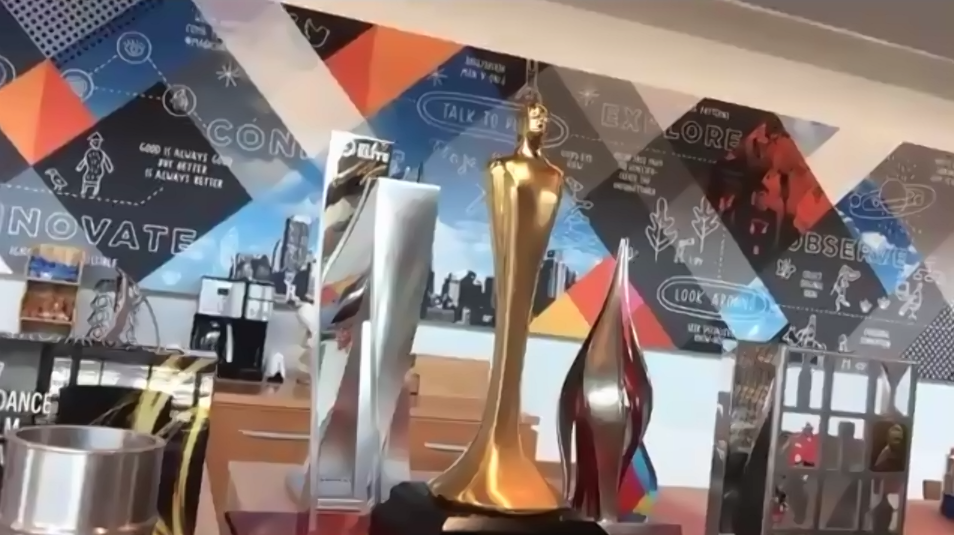
With these custom awards, innovative design meets with strategic recognition and each one is specific to the company it serves. Their manufacturing methods help to ensure “quality at the source” said Weston.
Not only does O.C. Tanner serve their clients with unique solutions, but the senior leadership also aims to serve the team members on the front lines.
“We began our journey focusing on continuous improvement as a culture almost 30 years ago.” said Peterson. “The old culture had the manager as most important, the ones who had all the answers. We basically turned that model on its head so that team members are now recognized every day as the ones who make most things happen.”
At the end of the workday, the teams gather to review the goals chart and everyone is equally involved. Through the use of “improvement cards”, each team member has the opportunity to input any ideas to develop a stronger process.

These suggestions are guided by the company “strategy map” that directs everyday efficiency. Once a month, the teams meet to review with executives.
“It would be ridiculous for me to go in and tell these guys how to do their job.” said Peterson. “All I can do as a leader is go in and say, ‘how can I help?’ These guys know what they’re doing.”
The leadership at O.C. Tanner takes great pride in the results of their team-driven improvement process. They have seen huge improvement in certain areas, especially decreasing “labor cost per piece” in their manufacturing facilities.
One team wanted to decrease labor cost per piece from $0.40 to $0.33 at 18% improvement by implementing 5 process improvements.

“That is an aggressive goal and our teams, they hit it.” said Peterson. “They actually implemented 7 process improvements and they have 4 others in progress besides that. It was more like a 22% decrease in cost in 6 months, pretty awesome.”
The team members as well take great pride in these work strategies. “Respect for every individual means they know what to do, they know what to expect with what they’re doing, and that they have as much value at work as possible.” said Weston.
During the tour, an employee was asked what the best thing about working for O.C. Tanner is. “Honestly, it’s got to be the culture,” he said. “The way we’re able to work with each other is just incredible. In fact, I’ve never seen it with any other company.”

He then described the benefits of team problem solving. “It’s one of the smartest ways you can attack any problem, because we all have different perspectives on situations. We all have different ways we want to approach and think about it. So, we’re able to connect with our teammates and brainstorm different ideas.”
To keep these contributing ideas fresh and to give a voice to numerous perspectives, O.C. Tanner aims to hire employees based on the ability to encourage their diverse, cooperative culture.
“A high percentage of our employees are refugees from various war-torn areas around the world.” said Peterson. “They come here with very little and being in a strange country with a strange language it’s very possible to feel disempowered; to feel like they’re on the fringes.
The powerful thing I think happens at work here is they get their mojo back. It’s very important to us that our people walk out this door not just having an impact here but walking out with swagger. We feel that we really impact the world.”


O.C. Tanner continues to look for ways to drive teamwork, encourage creativity at the source, and inspire a sense of pride in their employees. The positive atmosphere greatly influences the quality of the items they produce.
To learn more about O.C. Tanner’s products, services, and resources Click Here.
About World Trade Association
World Trade Association of Utah is the state’s longest standing non-profit organization dedicated to promoting and advancing international trade and commerce. The WTA provides a monthly forum for the exchange of ideas and information through various workshops, seminars, publications and special events with leading government, business, academic and international trade organizations. Each year WTA bestows the leading International Person of the Year Award and the International Company of the Year Award.
For more information, visit wtaofutah.com.
In January 2021, the World Trade Association of Utah welcomed a new board President, Vasilios Karpos. He brings over 27 years of experience in key areas such as raw material supervision, new design prototyping, and product development. As a creative and innovative business leader, international trade and diverse relations have been instrumental in his career path.

Seeking to expand his global network and promote production abroad, Karpos joined the WTA of Utah after connecting with fellow board member Franz Kolb, the State of Utah’s director of international trade and diplomacy.
Since opening his company, MARBLECast Products, Inc., in Salt Lake City in 1993, he has been impressed with the hard-working, creative, and highly skilled workforce, which continues to be a major driver of investment and success in Utah. With more than 120 languages spoken in Utah, it is a state that values diversity and champions international experiences.
In a recent interview, Karpos discussed his early career, organizational goals, as well as the importance of a global perspective.
Q: Tell me a little about your early career
International trade and relations played a major role in my early life and continue to do so today. Growing up in Athens, Greece, my family’s businesses spanned the tourism market, from manufacturing sculptures to sales and trade in Greece.
As a young student, it was exciting to interface with new customers and longstanding clients from across Europe to identify and create sculptural products that would not only meet their expectations but also leave them awe-inspired.
Those initial experiences drove me to open my own company, Marblecast, Inc in Salt Lake City. For over 25 years, our company has brought to life the vision of our clients all over the world through custom statue sculpting, molding, and casting.
From presidents and princes to professional athletes, to historical figures, and well beyond. Through our international lens focused on relations, we strive to deliver a one-of-a-kind product, giving each custom sculptural project our personalized attention and touch.
Q: What do you believe is the importance of having a diverse global perspective?
When people from various sectors and cultures come together in conversation, there is a great opportunity to listen and gain a greater understanding and appreciation for how different cultures live, where they place their value, how they’ve overcome local challenges, how they work and support the business community, etc.
Most times, it is inevitable that one will find value and learn from any part of those conversations, and it will stick with them as a memorable experience and learning opportunity for the better.
Whether one deals with international trade or not, a diverse global perspective can definitely broaden one’s views with either how they perform, how they manage their business and employees, or how they connect and network with their audience.
I find it interesting when people from various sectors and cultures come together in conversation, resulting in learning how different cultures work, and live, how they perhaps overcome local issues, what their countries do to support the business community, their local ethics, and experiences.
Q: What would you say are the results of this perspective with the WTA of Utah so far?
It’s incredible to imagine that WTA turns 50 this year. I’m proud to be part of its legacy in providing support and mentorship to thousands of seasoned entrepreneurs, new business owners, and students just beginning their journey in international trade.
For decades we have created a free and non-political platform to learn best practices, expand networks and take businesses aboard. We are also proud to have honored and celebrated the success of others by awarding the International Company of the Year and International Person of the year since our inception.
Q: What are some goals you and the board have for WTA?
The pandemic has changed how we live, earn and learn. Quoting the Ancient Greek Philosopher, Euripides; “Έστιν η λίαν δυσπραξία λίαν διδούσα μεταβολάς”, which translates to “Very difficult situations bring big changes.” For the WTA, this meant canceling luncheons, company visits, and international travel and hosting.
Our goal is to develop creative and digital ways to continue networking activities that include leading panel discussions, virtual company visits, and expanding global networking opportunities for businesses - bringing together Utah’s international professionals to promote, network, and expand international trade and commerce.
Karpos believes that whether one comes from a family business or chooses to pursue a self-developed career path, the most valuable advice is to always listen to your instincts and to know that obstacles will appear no matter the circumstance and to view those obstacles, not as negative happenings, but rather an instance to a newer and perhaps better path forward.
There are a lot of changes that are expected to happen within the United States as it moves into the new Biden Administration. What will these changes be and how will they affect the rest of the world? This was the topic of this month’s Kainach International Forum.
 On February 15, 2021 Franz Kolb, director of international trade, diplomacy and protocol for the State of Utah’s Governor’s Office of Economic Development, facilitated the discussion on the effects that President Biden will have on the international stage; specifically if it would lead to more collaboration or isolation. The discussion talked about the history of relations each country has had in the U.S., how President Trump affected those relationships, and what is expected with President Biden. This month’s panel of experts included:


We were privileged to hear what the impacts of the incoming Administration will be from the perspectives of each of our panel’s native countries. Many people from all over the world were able to ask questions through our virtual forum.
Overall, participants were hopeful that there will be more collaboration, especially with many of the European countries. Here are some of the important talking points from the forum.
Q: What was the relationship between your country and the U.S. during the period after World War II until the Trump Administration?
Mr. Utrilla: Peru’s relation with the United States is not specific to a political party. The relations are beyond that, especially over the past two decades. The relations over that time have been the best they have ever been due to the free trade agreement that Peru made with the United States. It is considered the model of free trade agreements for other foreign nations. Why is that? Because it encompasses not just the trade commercial relationships, but it also has to do with the intellectual property, protection, human rights, and other aspects that aren’t commercial relationships. For the Peruvians, the United States is the number one partner in the world. Not just in the form of selling products to the United States but also buying products from the United States, which makes the relationship very healthy. You want to make sure that both countries are winning in these relationships.
Dr. Lago: It is very difficult to describe almost a century of relations between Spain and the United States. In past years, we have always had a great working relationship with the United States. We have come up with multiple agreements, fought with each other in wars, and even fought against each other. In 1953, President Eisenhower made a treaty with Spain to put 4 different military bases in Spain in return for money, and this is really the start of great relations with the United States. Since then, there have been many different events that have brought the two countries together. The relations became especially strong during the Obama Administration.
Mr. Potdar: The relationship between India and the United States has transformed from a bilateral one to a strategic one. The relationship has become increasingly multifaceted, covering cooperation in the areas of defense, trade, nuclear energy, and space technology. Economic relations are also incredibly good. The United States is India’s biggest export destination, it accounts for 16 percent of the exported goods from India.
Mr. Schuck: The relationship between the U.S. and Germany is quite a bit more complicated. During the Cold War, the relationship between the two countries was very good. More specifically, Western Germany had a great relationship with the United States. In the 90’s it changed a little bit. Germany supported the U.S. on some military issues, but during the Iraq War, Germany voted against the U.S. on the UN security council. At that time the isometric power situation of Germany became clear. Germany has one of the strongest economies in Europe, but virtually no military power.
Q. How did your individual countries perceive international relationships during the Trump Administration?
Mr. Utrilla: With the Trump Administration, the relationship between Peru and the United States was very good. The president of Peru was the first president from the Latin American countries that Trump invited to meet with. Trump kept stating how the free trade agreement with Peru was a model of what the U.S. should be doing with other countries, especially with NAFTA.
Dr. Lago: During the first year of Trump’s Administration, the relationship between Spain and the U.S. was essentially nonexistent because Trump was focusing on “Making America Great.” However, after the first year, the Prime Minister of Spain was impeached and replaced with someone from the social-democratic party in Spain. From that point on, Trump refused to work with Spain. There was a particularly striking moment at the G20 Summit where Trump just told the prime minister of Spain to sit down and not talk. There were a lot of tariffs imposed on Spain to end products being imported to the U.S. from Spain. Trump was not a loved U.S. President to the Spanish people.
Mr. Schuck: (Thomas shared his screen and showed a poll showing the different perspectives of Germans and Americans). The polls showed that Germans saw the relationship with the United States as very bad while Americans didn’t see a problem with the relationship. Germans did not like it when Trump was president. After President Biden was elected, there was a noticeable increase in positivity of Germans' view of the relationship with the U.S.
Mr. Potdar: India’s prime minister was a great friend of Trump. There were two sides of the coin when it came to India’s relationship with the United States during the Trump era. On one hand, Trump was very strong against China which was very much welcomed by India. On the other hand, the visa restrictions on the IT professionals, other engineers, and other immigration laws were very frustrating to IT companies in India. However, by and large, the relationship between the executives of the two countries was very good.
Q. What are the panelists and audience members expecting from the new Biden Administration?
Each panelist expressed a lot of excitement and optimism for the new U.S. presidency. All of their comments can be summed up in one sentence from Mr. Schuck, representing Germany, “It cannot get worse, from here it can only get better.” While not all of the represented countries had as bad an experience with the Trump administration as Germany did, everyone was very optimistic for what the Biden administration will bring to the national stage. Mr. Utrilla, representing Peru, also expressed excitement from the one million Peruvians living in the United States for immigration reform to start to happen during President Biden’s time in office.
Attending individuals from other countries as far as Jordan, Luxembourg, and Mexico, also conveyed their optimism for the incoming Biden Administration, eager to see the United States retake its role on the world stage by rejoining the Paris Climate Accord and rebuilding relations with NATO.
The next Kainach International Forum, “Empowering Women in Politics, Business, and Communities,” will occur on March 8th at 10:30 a.m. MT. It will explore the powerful and important impact of women in the international business and political fields. For more information, you can visit www.kainachforum.org.
The Kainach International Forum is grateful to the World Trade Association of Utah and the World Trade Association of Greece for promoting these free events.
About World Trade Association
World Trade Association of Utah is the state’s longest standing non-profit organization dedicated to promoting and advancing international trade and commerce. The WTA provides a monthly forum for the exchange of ideas and information through various workshops, seminars, publications and special events with leading government, business, academic and international trade organizations. Each year WTA bestows the leading International Person of the Year Award and the International Company of the Year Award.
For more information, visit wtaofutah.com
Recently the World Trade Association of Utah had a chance to chat with Simon Greathead, Associate Professor of International Business and Supply Chain Management at BYU Marriott School of Business, to discuss an important aspect of international business: culture and how it relates to effective cross border trade.
As an expert on the topic, Greathead went into detail about his course at BYU “Culture as a Language of Business”.
“This primarily was for English language students who would like to learn about international business. As I started researching how I would build that class it came to me that culture in and of itself is a language of business and in many respects is considered more important than a second language,” said Greathead.
“There’s great power in individuals who are able to use cultural understanding as well as individual relations to get business done.”
The course is designed around the eight scales of culture defined in Erin Meyers best-selling book, "The Culture Map: Breaking Through the Invisible Boundaries of Global Business."
These eight scales are an important tool to understand the varying levels of communication styles in different regions. In America, communicating tends to be generally direct and upfront. This is also called "low context communication" according to Meyer.
The U.S. is one of the lowest context cultures in the world, because it is a young country that has a culture born from many different, interacting languages. Early settlers had to use their lowest common communication methods to build the nation.
In other areas of the world, such as Japan, the origin of language and culture dates back four to five thousand years. A deep understanding of communication between individuals is rooted in those many years of development. The communication style in Japan is considered high context and more nuanced.
This is commonly referred to as “kuuki wo yomu” in Japanese or “reading the air”. It is the idea of understanding what has not been said between individuals by considering other communication factors such as body language or context is key to effectively communicating in Japan. These subtleties may be lost on individuals coming from regions who practice lower context communication.
“You can buy the skill of language, meaning you can hire a translator.” said Greathead. “But what you typically can’t hire so easily is a cultural expert. So, if you understand culture it can get you a lot further in international business than a second language can.”
Understanding these levels of communication, or “context” as Meyers suggests, serves as the foundation for successful business relationships with individuals of other cultures.
When building the course, Greathead also pulled from the work of Geert Hofstede who extensively researched understanding culture from a psychological standpoint. He described culture using the metaphor of a forest and a tree.
Greathead said, “You can describe culture using characteristics of a forest, but unfortunately you cannot describe the tree.” This means you can understand a culture as a whole, but this does not describe every individual belonging to that culture.
Greathead describes this process of understanding culture as a journey - one that could take several years. “When I worked in Europe, I took my American wife with me. After two years, my wife, Brooke, understood well some of the nuances of British culture.” said Greathead. He explained that it takes approximately two years to confidently manage cultural nuances on a social and business level.
There are many readily available resources to learn more about navigating international business. Some of these resources include GlobalRoadWarrior.com or The Economist. According to Greathead, the best way to learn these different communication styles between cultures is to interact with them directly and ask them plenty of questions.
“It is an art and a science. The science is knowing the formalized characteristics are for a given culture. The art is knowing when to apply that knowledge and when to consider an individualized approach to a relationship” said Greathead.
The impacts of COVID-19 continue to be deeply felt across the supply chain industry, as many businesses seek to identify strategic ways to manage changes effectively. While the world has not yet reached a “new normal”, it is important to understand what has happened in the world of supply chain and what is yet to come to plan for business success.
On Jan. 28, the World Trade Association of Utah hosted a panel of supply chain experts to weigh in on the topic, including:


What is supply chain management? According to Simon Greathead, it is the planning, sourcing, making, delivering, and if needed, returning of products and services.
“Utah is a great example of a state with organizations in each one of the nodes of supply chain,” said Greathead. “Planning has to do with forecasting for demand. In other words, how much of a particular product are we going to sell. Then, we have sourcing or purchasing. Once you know how much you’re going to sell, then you need to purchase the required components. The middle part of supply chain is the production or the making of that product. Next, we have the logistics, the delivering of products. Lastly, there is returning for unneeded products.”
With a basic understanding of supply chain mechanics, the panelists took on timely questions surrounding latest trends, challenges and opportunities amid COVID-19 . Here are some important highlights to maximize supply chain success in the times ahead:
Q: What have been your observations on how COVID has impacted supply chains?
John: I’ll start by saying I’ve seen negative and positive impacts to this. There were customer delays as our supply chain got disrupted. We do have a lot of partners that we work with and a lot of delays and disruptions in their supply chains.
We saw an increase in cost as we had to expedite product in ways that we hadn’t planned for, but needed to and for us service comes first and cost does come later. We’re still struggling from the capacity issues from a pure transportation standpoint both domestically and especially on the international side now.
From a positive side, it really exposed some gaps that we had. You can see when you’re stretched thin and where the weaknesses are. So, we’ve really been able to go after those. Our morale is greater than ever, because we look back and say, “Wow we did this. We’re resilient and we’ve done this.”
Mark: The first problem is the crash of demand. There’s a huge shift in the value of the dollar. That’s going to have repercussions for a year to 18 months. Everything got more expensive and there’s been a secret inflation that’s happened and has been hidden in the US by our ability to print money. Product development has gone down. In order to develop and launch products you need to be in the country of where your manufacturers are, boots on the ground, and actually watching the iteration of that product being made.
There’s going to be a hole in new product releases for a lot of these companies and that’s been created by lack of ability to travel. Besides the supply and demand curve that we have, you’ve got inflation that’s lurking and that’s going to really hurt the stock market within a year or so.
Simon: Supply chains have shrunk in many aspects meaning companies are focused on those things that matter most to them that bring in revenue. They spend less time and money on software, consulting and auxiliary products associated with supply chain needs.
Q: Over the next 6-12 months, what are certain activities that we should be aware of that would either help or hinder supply chain progress?
John: With my company, our relationships with our suppliers need to be stronger than ever. That may mean strengthening the relations you already have, but also some diversification as well. Building in redundancy where we can, we try to set it up to where if we can’t fulfill orders in one facility then let’s shift where we can. We’re always trying to work with our inventory balance. The other thing is our communication has to be sharper than ever both internally and externally.
Mark: There is price elasticity, and this is a trigger for you to consider whether to raise the price of your product to protect gross margin and deliver cash to protect the business. It’s never been a better time to increase your prices, especially if you notice your competitors are having supplier weakness. What that does is generate from profit more cash and give you more run of the business.
You need an S&OP process, (sales and operation planning), which is your forecasting process, with real strength to understand the risk from a demand side. You need to have a basic depth of MRP software that is measuring lead time from your factories and lead time variation. That’s going to give you an early warning to problems.
Q: How can we use technology to mitigate some of the risk in supply chains?
Simon: Technology is a double-edged sword for most organizations and it’s the same in supply chain. I think COVID has made organizations simplify the use of technology. If technology does not help bring customer success, we should re-evaluate the use of it. First, let’s eliminate any technologies that are not helping us to achieve best customer outcome. And two, let’s find new technologies that help us help customers be happier than they are now.
Mark: The reality is we need to understand the trends of our new customers and how our new customers are acting. The way our consumers are buying our products are different. The technology of looking at sales to understand the trends you are seeing and using technology to understand the new patterns and the new “normal”. The answers lie in the data of sales today.
John: If we don’t have the right leadership and processes in place, and then we get a really cool system, we’re going to hard code some bad processes. We’re going to enable some things that we don’t want to have happen, so we have to be very careful about the right kind of technologies.
Q: What are some benefits of neo-sourcing vs far-sourcing?
Mark: It comes down to a standard equation of three things: it’s cost of labor, cost of overhead, and the cost or ability to get materials. From those three things you make a decision. When you go through the ability to understand those different things a lot of products get outsourced that have low labor content. You need to be not building a supply chain compared to how the last 18 months have been. Don’t forecast like we’re in COVID of March of 2020, because this is a black swan event.
John: Where local is possible – fantastic. Where it’s not, there’s certain components or ingredients that you can only get from certain areas. That’s where you have to work on other ways to strengthen that supply chain such as creating fantastic relationships with your sourcing partner there. What my current company will do is, they will invest in the community there, help build hospitals, and help the community to grow that area.
A Look Forward
What can we look for to signify a return to a “normal” 2019 business cycles? It’s going to happen faster than you think according to Kosiba. There is a demand for normalcy. A return of the roaring 20’s (spend, spend, spend) is on the horizon, though there will be restraint in logistics and ports not because of COVID breakouts, but because of capacity. Through all the positives and negatives through 2020, supply chain prioritization remains critical for business and brand success.
Keep up with all the latest WTA of Utah events on our website here: Click Here.
About World Trade Association
World Trade Association of Utah is the state’s longest standing non-profit organization dedicated to promoting and advancing international trade and commerce. The WTA provides a monthly forum for the exchange of ideas and information through various workshops, seminars, publications and special events with leading government, business, academic and international trade organizations. Each year WTA bestows the leading International Person of the Year Award and the International Company of the Year Award.
For more information, visit wtaofutah.com.